.
Ask Inyo Pool Products about complete, easy-to-use spring start-up kits. These kits are formulated with just the right amount of chemicals to get your pool ready for swimming.
BEFORE THE CHEMICALS
Circulation & Filtration
The pump and filter form the heart of any pool maintenance program. Without a strong, efficient pump and filter, keeping you pool water clear will be much more difficult and expensive. The best time to run your pump is during the day for at least ten hours.
Your filter removes both visible debris and microscopic particles. It should be backwashed when the filter's pressure gauge indicates levels 8 to 10 lbs. above normal (always follow manufacturer instructions).
It is also important that your pool water circulates around the perimeter of your pool. Water in motion makes it harder for bacteria and algae to take hold. More debris is also directed to your skimmers where it can be captured by your filter. Adjust the eyeball jets in your inlets to move your pool water in a circular motion.
Cleaning
All swimming pools have areas that have little or no circulation. These areas of minimal circulation are the breeding grounds for problems like algae growth. The walls and floor should be brushed and vacuumed once a week. Even if you use an automatic pool cleaner, brushing once a week is a must.
Testing
It is very important to test your water regularly for two (2) key factors: pH and sanitizers.
By testing your water at least three times per week you will begin to understand how bather load, weather (rain and sun) and chemical application affect your pool's water. By regularly testing pH and sanitizer levels, you will ensure crystal clear water all season long.
EASY POOL CARE PROGRAM
Simple, Quick, & Effective
With Blue Wave's Easy Pool Care Program, keeping your pool water crystal clear is a snap. Just four easy steps and you are done in no time.
For best results, make sure to:
Have good water flow through the skimmers (or chlorinator, if installed). Operate your pump and filter 10 or more hours per day.
STEP 1: Balance the Water
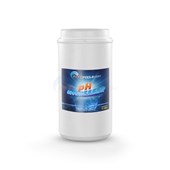
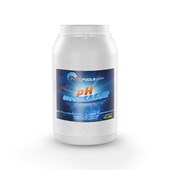
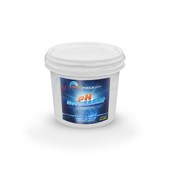
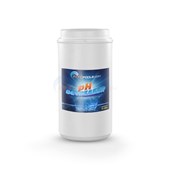
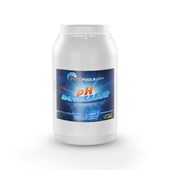
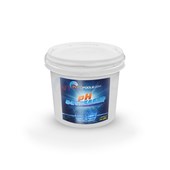
It is vital that proper pH is maintained in your pool at all times. If the pH is outside 7.2 to 7.6 it will greatly reduce the effectiveness of pool chemicals. Test your pH level at least three (3) times a week and use either Blue Wave pH Reducer or Blue Wave pH Increaser to bring the pH into the proper range. If you are finding it difficult to maintain your pH, check your total alkalinity and be sure it is in the ideal range. Adjust total alkalinity levels accordingly. Click here for all of our Pool Balancers
STEP 2: Sanitize
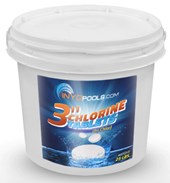
Blue Wave's 3 Sanitizing Tablets are the most efficient sanitizer to use in your pool. Our specially compressed 3 tablets are designed to dissolve slowly and steadily release free chlorine into your water to wipe out bacteria and keep your water clean. Plus, Blue Wave's 3 Sanitizing Tablets are stabilized to protect them from the sun's damaging rays, making them last longer and work more effectively. Always keep 3 tablets in your skimmer, floater, or automatic feeder to continue sanitizing.
Blue Wave also offers other stabilized chlorinated products in convenient sizes: Blue Wave 1 Sanitizing Tablets, Sanitizing Sticks, and Sanitizing Granules. Click here for all of Chlorine
STEP 3: Shock
As debris builds up in the water (such as perspiration, urine, suntan oil, and hair spray) it can cause eye and skin irritation and dull water. These contaminants tie up chlorine, keeping it from effectively sanitizing the water.
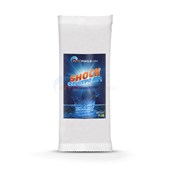
A treatment of Blue Wave Chlor-Burst or Blast Out once a week will oxidize these contaminants, freeing up the chlorine, and keeping your water crystal clear. Regular Blue Wave shock treatments will also kill resistant algae in the water.
Both Chlor-Burst and Blast Out are easy to use and available in convenient 1lb. bags. Chlor-Burst does not affect the pH or the calcium hardness making it ideal for hard water areas.
For pool owners that would prefer a non-chlorine shock after opening their pool, Blue Wave offers Blitz chlorine-free shock in handy 1lb. bags. Call Inyo Pool Products for details. Click here for Pool Shock
STEP 4: Algae Control
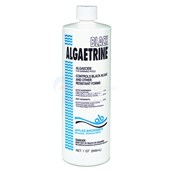
The best way to combat algae is to never let it get started. Blue Wave Halt 50 is a powerful algaecide that is very concentrated and low foaming. In fact, one quart treats up to 240,000 gallons!
Halt 50 is specially formulated to work well with other Blue Wave chemicals. It is non-metallic and will not discolor hair. Use Halt 50 weekly to prevent all types of algae from getting a foothold in your pool. Click here for all of our Speciality Products
Pool Care made easy
STEP 1: Balance The most important step. Use pH Increaser and pH Reducer to balance your pool water.
STEP 2: Sanitize For clean, bacteria-free water that is safe for swimming. Use stabilized 3 Sanitizing Tablets for long lasting effectiveness.
STEP 3: Shock Shock at least once a week for a trouble free season. Use Chlor-Burst or Blast Out .
STEP 4: Algae Control Prevent and kill all kinds of algae with our super concentrated Halt 50 algaecide.
because pool are for fun, not work!
WINTERIZING YOUR POOL
Investing the time to properly close your pool in the fall will make start-up a snap next spring season.
The proper way to winterize depends on the climate that the pool is located in. Consult Inyo Pool Products prior to closing for the proper procedure in your location. Ask about easy-to-use Blue Wave closing kits, pre-formulated for your pool size.
BLUE WAVE PRODUCTS FOR A CRYSTAL CLEAR POOL
pH Balancers
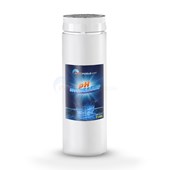
Because maintaining pH in the desired range is so important, we have made this the first step of our Easy Pool Care Program. PH balanced water makes routine chlorination, shocking and algae control chemicals work at their optimum levels. Blue Wave balancers include pH Increaser , pH Reducer , Alkalinity Increaser , and Hardness Increaser . Always test and adjust pH balancers before proceeding to adjust chlorine, shock or algaecide levels. It is the foundation of good pool water chemistry. Click here for our Pool Balancers
Shock Treatments
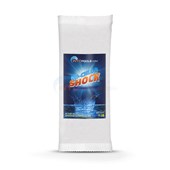
Shocking your pool is the third step in Blue Wave's Easy Pool Care Program. Shock treatments such as Blast Out , Chlor-Burst , and Blitz superchlorinate the water and destroy organic compounds introduced the pool water by bathers or air particles (such as lawn fertilizer). All Blue Wave shock treatments are available in easy to use 1lb. bags. Click here for our Pool Shock
TIP: Make a habit of shocking at least once a week for a trouble free season.
TIP: Remember to pre-mix Blast Out before adding it to the pool water to prevent bleaching of vinyl liners or other pool surfaces.
Algaecides
Green water is unattractive and it will make your pool unpleasant to swim in. Preventing algae is the fourth step of our Easy Pool Care Program. Halt 50 algaecide is powerful, non-staining, and very effective at preventing most types of algae.
Consult Inyo Pool Products for specialty algaecides that can be helpful in special situations where algae are a problem. Click here for our Specialty Products
Stain Preventers
Many water sources, especially wells, contain metals such as iron, copper, manganese. If these metals are left untreated they can stain your pool. Blue Wave's Super Rust & Scale prevents staining in metal laden water.
If you live in an area with high concentrations of iron or metals, test the water for metal content before filling your pool each spring. Click here for our Specialty Products
Clarifiers
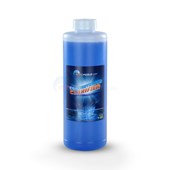
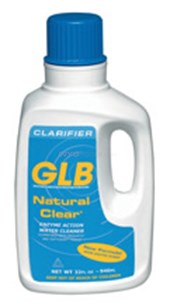
Concentrated Super Shimmer clarifier adds that extra sparkle to pool water. Plus, weekly use of Super Shimmer makes your filter operate more efficiently.
We also make strong cleaners to rid your pool of that water line ring and clean your filter. Ask your Inyp Pool Products Customer Service Representative about Tile & Vinyl Cleaner and Filter Clean . Click here for our Specialty Products
Water Testing
Testing your water frequently is the best way to insure crystal clear water and head off problems before they begin. We suggest that you test your water for free chlorine, pH, and total alkalinity at least 3 times per week. If any problems arise, call Inyo Pool Products for expert advice.
Spa Products
Spa owners can enjoy the same high quality chemicals that pool owners enjoy with Blue Wave spa products. This concentrated, high quality line of chemicals is specially formulated for hot water applications. Blue Wave spa products are compatible with each other to ensure a clean, safe soaking experience.
TROUBLE-SHOOTING GUIDE
How to Clean a Green Swimming Pool.
 |
Has your pool turned green? There are ways to take on a green swimming pool. Turning your pool from green back to crystal blue will take some time. With a little patients and work your green swimming pool will be ready to swim in again.
Below is a method that several professionals are currently using and our recommended way to clean a green swimming pool. Please follow the following steps and again be patient, your pool will be blue again. |
-
Remove Large Debris - Using a Aluminum Leaf Rake along with a Swimming Pool Telescopic Pole remove the larger debris found floating around your swimming pool. The large debris needs to be taken out first to ensure that you will not clog your pool cleaner, skimmer, main drain, filter, or piping.
-
Balance your green swimming pool pH level - This is the first chemical that needs to be added to a green swimming pool. You can use a ph Increaser and pH Reducer. pH is the first and most important step to proper care and ensuring your chemicals are most effective.
-
Shock your green swimming pool - Using Pool Shock will kill off bacteria and algae that is still in your green swimming pool. Most likely if your pool is a deep green you will need to add several bags of pool shock over a period of days. You will never over shock your green swimming pool. The more you add the quicker it will clear. This step will start to clear up your swimming pool.
-
Algaecide - This step is optional, but you may want to add some algaecide.
-
Run Pump and Filter for 24 hours - Running your filter will help clear out the remaining growth in your swimming pool. Due to the fact that your pool will be running 24 hours and the pool is not yet clear your filter will become clogged. To ensure this does not happened you will need to backwash your sand and d.e. filters at least 3 times a day. The more you backwash your filter the faster your pool will clear up. If you followed these steps and your swimming pool is still not clear after 4-5 days it may be time to replace your swimming pool filter.
-
How to Remove Red, Green, or Purple from your Pool
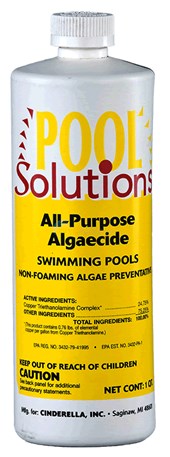
There are times when pool water will turn your water a color after adding chlorine or shocking your pool with a chlorine based shock. The color may change green, reddish, or a purple. The reason behind this color change usually indicates a metal is found in your swimming pool. The chlorine adds actually oxidizes the metal and will cause some type of reaction that is then visible in your swimming pool. There is treatment that can be added to your pool, but you may also want to find out what the source is that is causing the metal in your pool water. Metal in your pool water may come from several sources. If you work off a well then you may want to check metal content in your well. Even city water may have metal found in their water due to old rusty pipes that are going from your treatment center to your actual home. Other sources may be old pumps or heaters (very old) or old copper piping. Also some algaecides use copper in their mix so you may want to check if your recently used this. Let's first figure out what metal is in your pool.
What Color is your pool water?
Getting the metal out of your pool water.
How do I get the odor out of the Pool?
Chlorine Smell
If you have a strong smell of chlorine coming from your pool it is actually not the smell of chlorine, but rather the smell of chloramines. This is usually an indication that your pool water is not in the correct balance. You more then likely have a high chloramine level. You will need to have Chlorine 3-Way Test Strips and check for a free chlorine level of 1-3.
If you currently do not have any pool odor coming from your swimming pool you will want to keep Pool Perfect in your pool. It will help keep everything clear and perfect.
Musty Smell
We usually find that musty smells come from something covering your pool. It is probably more your pool cover then your actual swimming pool. if you do not use a cover or know that your pool cover is not the reason for your must pool smell it may be algae growth. Please read the following section How do I get rid of pool algae.
How do I prevent Eye and Skin Irritation in the Pool
Swimming Pools are supposed to be about having fun. The pool is no fun though when your eyes become red and irritated or when your skin is itchy or irritated. So in order to ensure that your pool fun is maximized and there is no eye and skin irritation here are a few steps to follow. Red irritated eyes and skin in the pool are usually the cause of of high chloramine level or an out of balanced pH level. You can check your pool pH levels using our Chlorine 3-Way Test Strips. Check for the following
Following the steps above should help stop eye and skin once it is already happendingl. If the pool is not currently causing and eye or skin irritation you will want to keep Pool Perfect in your pool. It will help keep everything clear and perfect.
How do I remove Calcium Deposit on the Pool?
Calcium can form along the rim and inside the tile of your swimming pool. This is usually caused by either high pH, alkalinity, or Calcium content being too high. Extreme temperatures along with rapid evaporation will cause a calcium deposit to settle along side your pool and get into your tile. If this calcium is not removed then it will cause permanent damage to your pool tile. High Calcium in your swimming pool can also lead to eye irritation. This can happened even if you do not see the deposits along side your pool. High Calcium levels need to be reduced. You will need to check your chemical levels using our Aqua Check 6-Way Test Strips. If your levels are off please use the following steps.
-
pH too High - use pH Reducer to bring pH level to 7.2 - 7.6 ppm
-
Alkalinity too High - use pH Reducer to bring pH level to 100 - 150 ppm
-
How to Clear Cloudy Pool Water.
You want your swimming pool to look nice to swim in. Cloudy Pool Water is not fun, but is also very common in swimming pools. There are several reasons why your pool may be cloudy. Below is a list of common things you can check to help clear your cloudy pool water.
 |
Chemical levels. You want to be consistent with your pool chemical levels. Test often to ensure you have the proper amounts of chlorine and other chemical levels in your swimming pool. Use our Aqua Check 6-Way Test Strips to check for the following proper levels.
|
 |
Filter - Make sure that your pool filter is working properly and is clean or backwashed. Also ensure that your pool filter valves are properly installed and working. Make sure that the filter valve is also in the correct position.
- Cartridge Filters - Clean your cartridge and make sure it is still functioning properly. Depending on the use of your swimming pool Inyo recommends that you replace your pool filter cartridge once per season. Click here for all of our Pool Filter Cartridges.
- Sand Filters - You will need to make sure you are properly backwashing your sand filter completely .Also ensure that your filter has the right amount of sand in the filter and that you are using proper filter sand. Need more sand. Use Zeobest Sand Alternative.
- D.E. Filters - Properly backwash your D.E. filter and ensure your valves are in the proper positions. Make sure you have D.E. and the proper amount of D.E. in your filter. Need more D.E. Use our D.E.
|
 |
Pump - Below is a checklist for your pump to help clear your cloudy pool water.
- Are you running your pump long enough? The average amount of time a pump should be run per day is 8 hours. If you are getting cloudy pool water you may want to try running it for a longer period of time. Try running it for 24 hours and see if this clears it up.
- Is your pump to large for your Filter? - Make sure your swimming pool pump is properly fitted for your filter. If you have a high GPM rating on your pump and it is too much for your filter to handle this may lead to the pool filter not working properly.
- Pump Strainer basket is not clean
- Pump Impeller is worn or not working properly
|
Too many people in the pool - If your pool is getting a lot of use with a lot of people this cause added stress to your pump and filter. Oils, urine, and other debris from people will need to be cleaned. If this is the case run your pump for a longer period of time and backwash your filter and add a clarifier AquaPill
Algae Growth - Whether it is dead or alive Algae will need to be removed from your swimming pool. Depending on the amount of algae in your pool there are a few steps. If your pool is very cloudy and turning green please follow the following steps. How to Clean a Green Swimming Pool. If it is not extremely cloudy you can try algaecide
Add Clarifier to your pool. - AquaPill
How to get rid of Pool Algae.
Algae in your pool can be the most aggravating part of owning a swimming pool. So of course we often get the question how to get rid of pool algae. Algae can enter your swimming pool through wind, rain, or people entering your swimming pool. Through poor circulation of the swimming pool the algae can thrive and grow in your swimming pool. At this point though you probably are not worried about how the algae got there, but rather how to get rid of pool algae.
Identify the Algae.
There are several types of algae that can grow in your swimming pool. Proper treatment depends on what type of algae is growing in your swimming pool.
-
Green Algae
Green Algae is the more common of the algae's found in swimming pools. This type of algae can be found floating in the swimming pool, but can also be found on the walls. Your pool will become less clear and have a green color to it. The wall green algae can grow in sheets and be slimy.
-
Yellow Algae
Yellow Algae is a wall algae. Mustard algae is often found in shady parts of the swimming pool. Yellow algae is a hard algae to fight. It often comes back. So if this is the algae that is in your swimming pool then it needs to be dealt with as soon as possible.
-
Black Algae
By far the hardest algae to deal with is Black Algae. It comes in dark black, green or blue spots. It is a tar like deposit. The spots are tiny no larger then a dime. Once black algae finds your way into your swimming pool it is very very difficult to get rid of. The roots are the key. They can extend into plaster or grout and need to be taken out or it will come back.
-
Pink Algae
This bacteria is found in cracks, corners, and crevices. They are in one area and appear as small pink spots.
How to get rid of pool algae?
Below is a list of types of swimming pools and how we suggest riding your swimming pool of the type of algae.
-
Green Algae floating in the pool.
- Using Test Strips check your pH levels. It should be at 7.2 - 7.6 to ensure once again that your chemicals will behave properly when added.
- Add a Chlor-Burst (Dichlor) shock as directed on the manufacturer dosage suggestion for use with algae.
- Allow the pool pump and filter to run for full 24 hour days and backwash your filter as much as possible.
- Check in 12 - 24 hours to see if your pool has made a drastic change for the better. If it has not add a second batch of Chlor-Burst (Dichlor). Repeat until green algae has been eliminated. Eliminated means you know longer see green in your pool. The algae will turn white or grayish in color.
- The algae will settle on the top or on the bottom of the pool. Vacuum the rest of the algae out of the pool. We recommend you use a vacuum that does not go direct to your filter. This will save your filter from doing too much work.
- Backwash or Clean your swimming pool filter.
- Using Test Strips check your pH levels. It should be at 7.2 - 7.6, Alkalinity 80 - 120 ppm, and Calcium Hardness of 200 -350 ppm.
- Use Concentrated Algaecide to help prevent more algae growth on a 1 - 2 week basis. Also keep your chemicals in check. A 1-3 ppm level of Free Chlorine will help keep algae away.
-
Green, Yellow or Pink Algae on pool walls.
- Using a Nylon Swimming Pool Brush brush down the side of the pool walls to get as much green algae off of the walls. This will help when you add chemicals into the swimming pool. If you have a concrete pool use a steel brush, if you have a vinyl pool use the Nylon Swimming Pool Brush
- Using Test Strips check your pH levels. It should be at 7.2 - 7.6 to ensure once again that your chemicals will behave properly when added.
- Shock your pool. Add a Chlor-Burst (Dichlor) shock as directed on the manufacturer dosage suggestion for use with algae.
- Turn your pump and filter on to run for the full 24 hour day. It is important that while you are running your pump you continuously clean or backwash your filter.
- Check in 12 - 24 hours to see if your pool has made a drastic change for the better. If it has not add a second batch of Chlor-Burst (Dichlor). Repeat until algae has been eliminated. .
- The algae will settle on the top or on the bottom of the pool. Vacuum the rest of the algae out of the pool. We recommend you use a vacuum that does not go direct to your filter. This will save your filter from doing too much work.
- Backwash or Clean your swimming pool filter.
- Using Test Strips check your pH levels. It should be at 7.2 - 7.6, Alkalinity 80 - 120 ppm, and Calcium Hardness of 200 -350 ppm.
- Use Concentrated Algaecide to help prevent more algae growth on a 1 - 2 week basis. Also keep your chemicals in check. A 1-3 ppm level of Free Chlorine will help keep algae away.
-
Black Algae.
- Brushing is very important with Black algae. It is very important you get rid of the roots as well as the spores and get rid of them quickly. Using a Steel Brush for Concrete pools or a Nylon brush for Vinyl pools brush the plant as much as possible.
- Vacuum the pool to waste. If you have to use your filter backwash and clean your filter as much as possible. It is very important that you get as much as the algae out of the pool so they do not start forming again.
- Using Test Strips check your pH levels. It should be at 7.2 - 7.6 to ensure once again that your chemicals will behave properly when added.
- Rub the black spots with a TriChlor tablet to put Trichlor and dig right into the roots.
- Add a Chlor-Burst (Dichlor) shock as directed on the manufacturer dosage suggestion for use with algae.
- Allow the pool pump and filter to run for full 24 hour days and backwash your filter as much as possible.
- Again if you see any remaining black algae get it out of the pool as quickly as possible.
- Backwash or Clean your swimming pool filter.
- Using Test Strips check your pH levels. It should be at 7.2 - 7.6, Alkalinity 80 - 120 ppm, and Calcium Hardness of 200 -350 ppm.
- Add a Black Algaecide to help prevent more black algae regrowth on a 1 - 2 week basis. Also keep your chemicals in check. A 1-3 ppm level of Free Chlorine will help keep algae away.
.
Why did the Pool Turn my Hair Green?
You have heard the story or maybe you have experienced it yourself. You swim in a pool and you come out with green hair. This is more often seen in blond hair, but when it happens there are some steps that can be taken to ensure it does not happened to anyone else. Too high Chlorine or not balanced pH levels are often to blame, but that is not the case. Copper is the real culprit. High Copper in the water will usually oxidize with the addition of a lot of chlorine to the swimming pool. The copper will then turn a green color and cling to your hair. If you never shock your pool or keep your pH levels in complete control then you will not have green hair, but as soon as you start to increase other levels the results due to high copper in the water will turn your hair green again. So please click How to remove red, green, or purple from your pool.
If you do have copper in your pool you must use Super Rust and Scale Remover
How do I remove Green color from my hair?
There are several suggestions giving to Inyo each year. The majority of our customers have left feedback that they used a Tomatoes based juice, sauce, or soup that worked. Tomatoes juice would actually act as a neutralizer with the chlorine and help cause the copper to turn white. This is just a theory we have read about and heard back from our customers. Inyo employees have not actually turned their hair green and tried the tomatoes theory. Stylist may be mad at us on this Tomatoes suggestion, so for them we have another suggestion. A couple people have told us that Prell shampoo has worked. There are also shampoos on the market that are just for getting green out of your hair from swimming in a copper pool. Hope this helps.
My Pool is Causing Metal Corrosion.
Are you starting to develop corrosion on your swimming pool products? Ladders, pumps, or rails can start to corrode if your swimming pool chemical levels are not properly in place. Outside sun and weather can also cause corrosion in metals. If the weather is the reason is weather you will need to find the proper equipment to take on these conditions. If you think that your pool is not properly balanced you will need to check your chemical levels using our Chlorine 3-Way Test Strips (50 Strips). If your levels are off please use the following steps.
-
pH too Low - use pH Increaser to bring pH level to 7.2 - 7.6 ppm
-
Alkalinity too Low - use pH Increaser to bring pH level to 100 - 150 ppm
-
Salt Water Generators
There has been a lot of talk of Salt Water Generators causing damage to swimming pool equipment. Salt Water Generators have been on the market for quite some time it is only recently when the Salt Chlorine Generators have been becoming more popular that there has been atack on these products. Salt Generators will not cause corrosion in your swimming pool. It has become a direct attack from other chemical manufacturers where the rumor has started. The problem that many people have is one metal being in direct contact with another different type of metal. For instance if your stainlees steel pool product is screwed in with a non stainless steel screw the metals will start to corrode. If this is your case please ensure that your products have the same type of metals used in direct proximity. Pumps, Heaters, and Filters unless very old have the proper parts not to cause any type of corrosion problems. Click here for our Salt Chlroine Generator
Why Can't I get my Chlorine Level High Enough?
Inyo has heard the story before. No matter how much chlorine you add you cannot get the chlorine level high enough. The pool chemicals are all in balance, but the pool is just eating up the chlorine. Our customers have complained that their tablets are being used up faster then they can put them in their pool chlorinator. Causes of high chlorine consumption is high temperatures, high bather loads, rain and pollution, algae, and the water source can cause some issues.
How to get Chlorine Level back to a Normal State
If you are already in a state where you cannot keep your chlorine level high enough please use the following steps to help get it back to a normal state.
Opening the Pool?
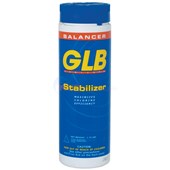
At the beginning of the pool season you should always add Stabilizer to help keep the chlorine consumption down. This will help prevent the issue of having not being able to keep your chlorine level high enough.
How do I get rid of the ring around my Pool?
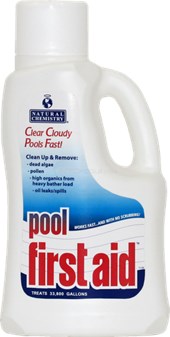
Do you have a thick black ring around your swimming pool it may be due to grease and oils from the pool users. The best way to get rid of oils and organic buildup is to use Pool First Aid. It is a natural pool chemical that will get rid of the pool scum. You can scrub it down using a Brumgee Scum Mitt
Please make sure that your pool ring is not calcium scale build up. If it is please follow the following steps. How do I remove calcium deposit on the pool
GLOSSARY
Algae Various forms of microscopic plant life that can rapidly grow and multiply in the presence of light. There are many varieties , some are free floating and others grow on surfaces. Some are more resistant to chlorine than others.
Algaecides Chemicals that prevent and control agae. Some are designed to kill specific types of visible agae.
Bacteria Germs that can get into your pool or spa by way of users and from the environment.
Balanced Water The correct ratio of mineral content and pH that prevents water from the environment.
Bromine An alternative sanitizer sometimes used in place of chlorine. Excellent for spas and indoor pools because it lasts longer in high heat and has no chlorine odor.
Calcium Hardness The amount of dissolved calcium in pool water. Should be approximately 150 175 ppm for vinyl-lined pools, 240 300 ppm for concrete or plaster pools. High hardness can cause cloudy water and scale. Lower levels can damage pool surface and equipment.
Chloramines Compound formed when chlorine combines with nitrogen from urine, perspiration, suntan oil, hair spray, etc. Chloramines cause eye and skin irritation and unpleasant odors.
Chlorine The most efficient and widely used sanitizer for ppols. There are two types: nonstabilized inorganic chlorines (i.e. calcium hypochlorite, lithium, sodium hypochlorite) and stabilized organic chlorines. The latter are preferred because they are stable in the presence of sunlight.
Chlorine Demand The chlorine required to eliminate contaminants in your pool. Chlorine may need to be added in large quantities before chlorine demand is satisfied.
Chlorine Residual The amount of free chlorine in your pool.
Cyanuric Acid A chemical compound that protects chlorine from loss due to sunlight. Also referred to as stabilizer.
Diatomaceous Earth (D.E.) A fine, powdery substance that comes from the calcified remains of prehistoric single-celled marine animals. This very porous substance is a great filtration media.
DPD The test reagent used to measure and indicated chlorine levels. The presence of chlorine turns the indicator to pink.
Dry Acid Blue Wave's pH Reducer. This granular product lowers pH and total alkalinity of pool water. Also referred to as sodium biosulfate.
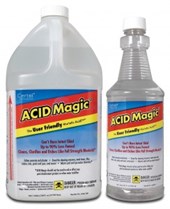
Liquid Acid A liquid chemical (muriatic or hydrochloric acid) used to reduce pH and total alkalinity. A dangerous, corrosive chemical that should be handled with care.
Muriatic Acid See liquid acid.
OTO A liquid test readent used to determine total chlorine. (See also DPD).
pH A measure of acidity or alkalinity of pool water. The ideal range is 7.2 to 7.6 ppm. Low pH results in corrosive water than can damage pool surfaces and equipment. High pH results in cloudy water and scale formation. Improper pH levels can also reduce the effectiveness of chlorine and cause swimmer discomfort.
Phenol Red A reagent used in testing pH.
Ppm Parts per million, the accepted measurement of chemical concentration in pool water.
Scale A hard, rough deposit found on pool surfaces or in pool plumbing. Results from hard water and high pH levels.
Soda ash Sodium carbonate; Used to raise the pH of pool water.
Sodium bisulfate (see dry acid)
Stabilizer (see Cyanuric Acid)
Shock treatment (see superchlorination)
Superchlorination Also known as a shock treatment. Adding a significant amount of chlorine to a pool in order to oxidize unwanted organic material and provide a quick free chlorine residual.
Total Alkalinity (TA) Affects and controls pH. If total alkalinity is too high, pH will be hard to adjust. If it's too low, pH will be unstable and difficult to maintain. The ideal range is 80 150 ppm, depending on the interior pool finish.
Click here for our Pool Chemicals